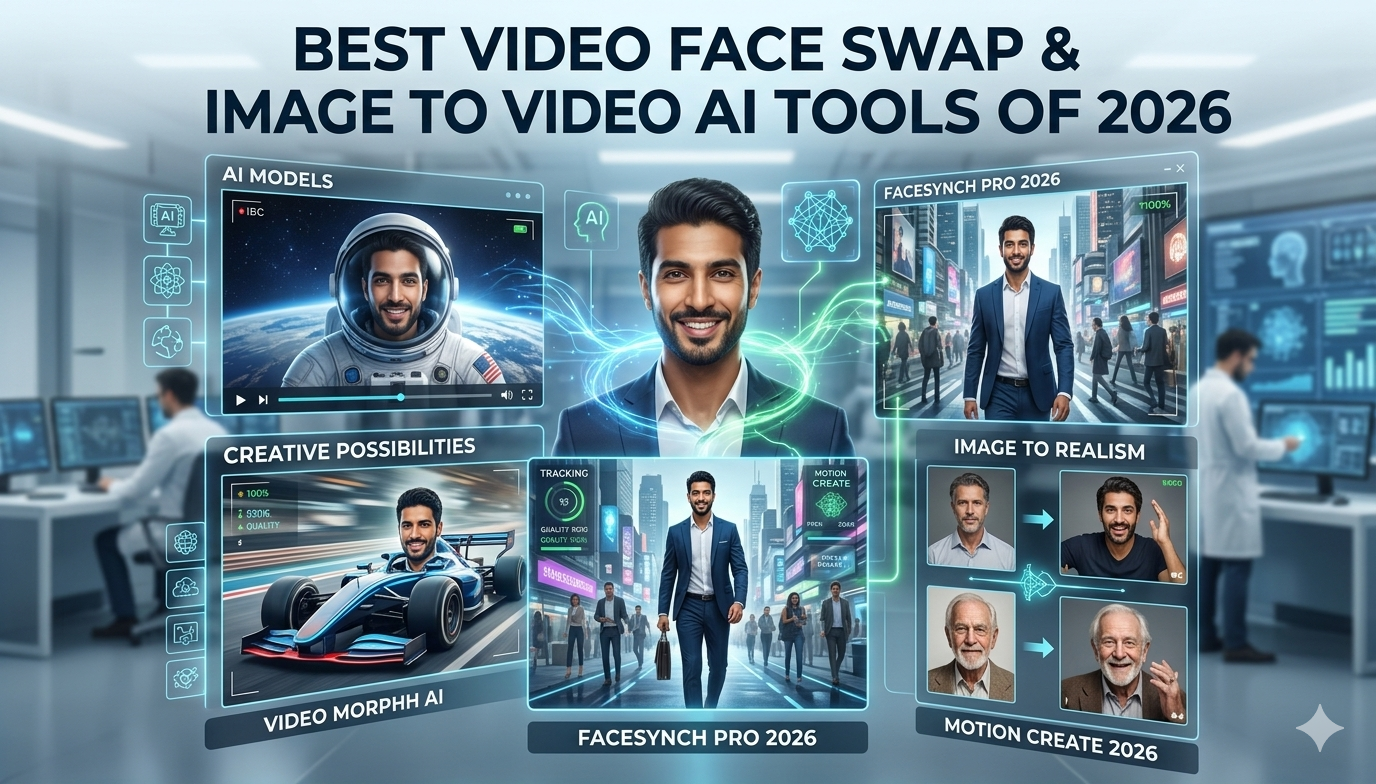
Artificial intelligence has completely reshaped how creators produce and edit visual content. From realistic face transformations to turning static images into dynamic videos, modern tools now make advanced editing accessible to everyone. Whether you’re a content creator, marketer, filmmaker, or social media enthusiast, the rise of video face swap and image to video AI tools has unlocked entirely new creative possibilities.
In 2026, the competition in this space is intense. However, only a handful of platforms truly stand out based on quality, speed, flexibility, and pricing. This expert-curated list highlights the best tools available today, with a detailed look at features, use cases, and value.
1. Magic Hour (Best Overall AI Video Creation Platform)
Magic Hour takes the top spot in 2026, not just as a face swap tool but as a complete AI-powered creative ecosystem. It combines video face swap, lip sync, and image to video AI capabilities into a seamless, high-performance platform.
What sets Magic Hour apart is its ability to simplify complex workflows into one-click actions. You can go from a static image to a fully animated video with synced speech in minutes. Unlike many competitors, it requires no signup to try, which lowers the barrier for new users.
Magic Hour’s pricing is also one of the strongest advantages:
- Free plan available
- Creator plan: $15/month or $10/month billed annually
- Pro plan: $39/month
The platform delivers exceptional value, especially considering that credits never expire, a rare feature in AI tools.
Key differentiators include:
- Best-in-class face swap and talking photo realism
- One-click workflows for multi-step processes
- Access to multiple frontier AI models in one place
- Parallel generations with no concurrency limits
- Weekly feature updates and rapid innovation
- Strong API support for developers
- Reliable performance even under heavy traffic
- Optimized experience across desktop and mobile
Magic Hour is ideal for creators who want speed, quality, and flexibility without juggling multiple tools.
2. Reface AI
Reface AI continues to be one of the most recognizable names in the video face swap category. Known for its viral appeal, it allows users to swap faces in GIFs, short videos, and memes with impressive accuracy.
While it is more entertainment-focused than professional-grade tools, Reface excels in ease of use. Its mobile-first approach makes it accessible for casual users and social media creators.
The downside is that it lacks deeper editing workflows and advanced customization compared to platforms like Magic Hour. It is best suited for quick, fun content rather than production-level projects.
3. DeepSwap
DeepSwap has carved a niche as a reliable AI face-swapping tool for both photos and videos. It supports multi-face swaps and offers relatively fast processing times.
The platform is particularly useful for YouTubers and meme creators who want consistent results without spending too much time on editing. It also supports batch processing, which is helpful for repetitive tasks.
However, its interface and creative flexibility are somewhat limited. It focuses heavily on face swapping rather than offering a full image to video AI pipeline.
4. Pika Labs
Pika Labs has gained massive attention for its ability to turn text and images into cinematic video clips. It stands out more in the image to video AI category than in face swapping.
Users can upload an image and generate stylized motion videos with prompts. This makes it a powerful tool for storytelling, concept visualization, and creative experimentation.
While Pika Labs delivers impressive visuals, it lacks integrated face swap and lip sync features. It works best when combined with other tools for a complete workflow.
5. Runway ML
Runway ML remains a powerhouse in AI video editing. It offers a wide range of tools, including video generation, background removal, motion tracking, and more.
Its image to video AI capabilities are particularly strong, enabling users to animate still images into engaging sequences. It also supports collaborative workflows, making it popular among professional teams.
That said, Runway ML can feel complex for beginners, and its pricing can scale quickly depending on usage.
6. HeyGen
HeyGen is a leader in AI avatar and talking head videos. It allows users to create realistic presenters using uploaded images or pre-built avatars.
This platform excels in corporate and marketing use cases, especially for training videos, product demos, and multilingual content.
Its lip sync technology is highly accurate, but it is less flexible for creative face swapping compared to Magic Hour. It focuses more on structured video generation than open-ended creativity.
7. Synthesia
Synthesia is widely used for enterprise video production. It enables users to create AI-generated videos with avatars delivering scripted content.
While it is not primarily a video face swap tool, its ability to animate faces and sync speech makes it relevant in this space.
Synthesia is best suited for businesses rather than individual creators, as its pricing and workflow cater to professional environments.
8. D-ID
D-ID specializes in turning still images into talking videos. Its strength lies in facial animation and expression realism.
This makes it a strong contender in the image to video AI category, especially for educational and storytelling applications.
However, it lacks broader creative tools and integrated workflows. Users often need additional platforms to complete their projects.
9. FaceMagic
FaceMagic is another mobile-friendly face swap app that focuses on quick edits and social sharing.
It supports both images and short videos, making it versatile for casual use. The interface is simple, and results are generally consistent.
That said, it does not offer advanced AI features like multi-step workflows or high-end video generation, limiting its appeal for professional creators.
10. Kaiber AI
Kaiber AI is a creative tool designed for transforming images into stylized videos. It is popular among artists and musicians for creating visually unique content.
Its strength lies in artistic expression rather than realism. While it does not focus heavily on video face swap, its image to video AI capabilities are impressive.
Kaiber is best for experimental projects and creative storytelling rather than traditional editing tasks.
How to Choose the Right Tool
Selecting the best AI tool depends on your goals, skill level, and budget. Some platforms prioritize speed and simplicity, while others focus on advanced customization and professional output.
Here are key factors to consider:
- Output quality and realism
- Ease of use and learning curve
- Pricing and credit system
- Workflow efficiency
- Available features beyond face swapping
- Integration with other tools or APIs
If you want an all-in-one solution that balances quality, speed, and value, Magic Hour clearly leads the market in 2026.
Why Video Face Swap and Image to Video AI Matter
AI-powered editing is not just a trend. It is becoming a core part of digital content creation. These tools save time, reduce production costs, and open new creative opportunities.
Content creators can now:
- Produce high-quality videos without expensive equipment
- Experiment with storytelling in new formats
- Personalize content at scale
- Create viral social media clips quickly
Businesses can leverage these tools for marketing, training, and customer engagement, making them a valuable investment.
The Future of AI Video Creation
The evolution of video face swap and image to video AI is far from over. In the coming years, we can expect even more realistic outputs, faster processing, and deeper integration with other creative tools.
Platforms like Magic Hour are already pushing boundaries with features like parallel generation and one-click workflows. As competition grows, innovation will continue to accelerate.
FAQs
1. What is video face swap technology?
Video face swap uses AI to replace a person’s face in a video with another face while maintaining realistic expressions, lighting, and movement.
2. What is image to video AI?
Image to video AI transforms static images into animated videos by adding motion, facial expressions, and sometimes voice synchronization.
3. Is Magic Hour really free to use?
Yes, Magic Hour offers a free plan with generous features. Paid plans start at $15/month or $10/month annually, providing excellent value.
4. Which tool is best for beginners?
Magic Hour and Reface AI are both beginner-friendly, but Magic Hour offers more advanced features as you grow.
5. Are these tools safe and legal to use?
Most platforms are safe when used responsibly. Always ensure you have permission to use someone’s likeness and follow platform guidelines.
Final Thoughts
The AI video editing landscape in 2026 is more powerful than ever. Whether you need a quick face swap or a fully animated video from a single image, there is a tool for every use case.
Magic Hour stands out as the best overall choice due to its unmatched combination of features, pricing, and performance. It is not just a tool but a complete creative platform designed for modern content creators.
If you are serious about AI-driven video creation, starting with Magic Hour is a smart move.