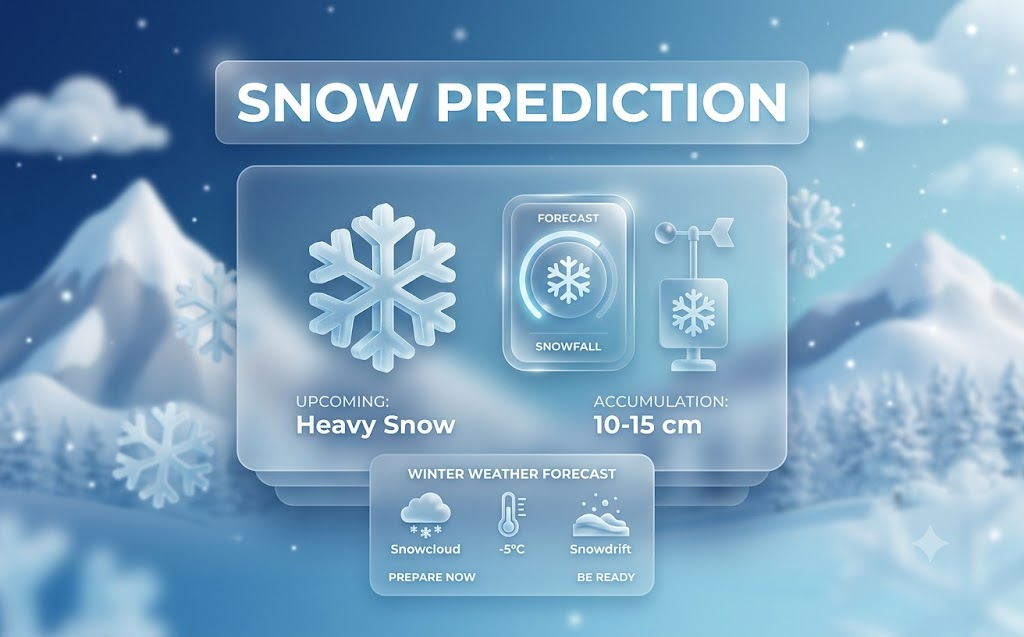
Snow Prediction plays an important role in helping people prepare for winter weather. Whether you are planning a road trip, organizing outdoor activities, or simply deciding what to wear, understanding snowfall forecasts can make your day safer and more convenient. Modern forecasting combines advanced technology, satellite observations, weather models, and historical climate data to estimate when and where snow is likely to occur. While no forecast is perfect, today’s prediction methods are far more accurate than they were decades ago.
People often rely on weather forecasts during the winter season because snow can affect transportation, schools, businesses, and public safety. Even a small snowfall can create hazardous driving conditions if temperatures remain below freezing. By learning how Snow Prediction work, you can better interpret weather reports and make informed decisions before winter storms arrive.
What Is Snow Prediction?
Snow Prediction is the scientific process of forecasting whether snow will fall, how much accumulation is expected, and when the snowfall will begin and end. Meteorologists study atmospheric conditions to determine the likelihood of snow in a particular region.
Several weather factors must align for snowfall to occur. Cold air must exist from the clouds to the ground, sufficient moisture must be available, and a lifting mechanism such as a cold front or low-pressure system must help clouds develop. When these conditions come together, snow becomes possible.
How Meteorologists Predict Snow
Weather experts use a combination of observations and computer models to forecast snowfall. Satellites monitor cloud development, while weather radar tracks precipitation movement. Ground weather stations continuously measure temperature, humidity, wind speed, and atmospheric pressure.
Computer weather models process millions of weather observations every day. These models simulate atmospheric changes over several days, allowing forecasters to estimate snowfall timing, intensity, and accumulation. Meteorologists compare multiple models before issuing public forecasts to improve overall accuracy.
Important Factors That Affect Snowfall
Several weather conditions influence whether snow reaches the ground. Temperature is the most important factor because snowflakes melt quickly if air near the surface becomes too warm. Generally, temperatures at or below freezing support snowfall.
Moisture is equally essential. Without enough moisture in the atmosphere, clouds cannot produce enough snowflakes. Wind direction, elevation, humidity, and atmospheric pressure also affect how much snow develops and where it eventually falls.
Why Snow Forecasts Sometimes Change
Many people notice that snowfall forecasts often change a day or two before a winter storm. This happens because weather systems constantly evolve. Even small shifts in storm tracks can dramatically alter snowfall totals for nearby cities.
Forecast models improve as additional weather observations become available. Meteorologists regularly update predictions using the latest satellite images, radar data, and atmospheric measurements. These updates help provide more accurate forecasts as storms approach.
Technology Behind Modern Snow Forecasting
Today’s forecasting technology is much more advanced than it was in previous decades. Weather satellites observe cloud patterns across entire continents, while Doppler radar detects precipitation intensity and movement in real time.
Supercomputers process enormous amounts of atmospheric data every few hours. Artificial intelligence also assists meteorologists by identifying weather patterns that resemble previous winter storms. Together, these technologies improve the reliability of modern snow forecasts.
Understanding Snowfall Probability
Many weather apps display the probability of snow instead of guaranteeing snowfall. This percentage represents the likelihood that measurable snow will occur at a specific location during a certain period.
For example, a 70 percent chance of snow means atmospheric conditions strongly support snowfall, but there remains a possibility that the storm may shift or temperatures may change. Probability forecasts help users understand uncertainty rather than offering absolute predictions.
Snowfall Accumulation Estimates
Forecasts often include expected snowfall totals such as one to three inches or five to eight inches. These ranges acknowledge natural uncertainty in weather forecasting. Slight changes in temperature or storm position can significantly alter final accumulations.
Heavy snowfall usually occurs when moist air combines with consistently cold temperatures. Dry snow often accumulates more deeply because it contains less water, while wet snow is heavier and denser, leading to lower depth but greater overall weight.
Regional Differences in Snow Prediction
Forecasting snow varies greatly depending on geography. Mountain regions experience more frequent snowfall because rising air cools rapidly as it moves uphill. Coastal areas often present forecasting challenges because nearby oceans influence temperatures.
Northern climates generally have more consistent snow forecasts during winter because temperatures remain below freezing. In contrast, southern regions may experience mixed precipitation such as rain, sleet, or freezing rain, making accurate prediction more difficult.
Using Snow Forecasts for Travel Planning
Travelers benefit greatly from checking snowfall forecasts before beginning winter journeys. Snow-covered roads reduce visibility and increase stopping distances, making driving considerably more dangerous.
Airlines also monitor winter weather closely because heavy snow and ice affect airport operations. Checking updated forecasts before departure helps travelers avoid delays, cancellations, and hazardous road conditions during severe winter storms.
Preparing Your Home for Snow
Snow forecasts allow homeowners to prepare before storms arrive. Clearing gutters, checking heating systems, and stocking emergency supplies become much easier when advance notice is available.
Families should keep flashlights, batteries, blankets, bottled water, and nonperishable food available during major snowstorms. Heavy snowfall occasionally causes power outages, making emergency preparation an important part of winter safety.
Snow Prediction for Outdoor Activities
Winter sports enthusiasts closely monitor snowfall forecasts throughout the season. Skiers and snowboarders rely on fresh snow predictions to choose the best travel dates and resort locations.
Hikers, photographers, and campers also use snowfall forecasts when planning outdoor adventures. Knowing expected weather conditions improves both safety and overall enjoyment while reducing exposure to dangerous winter weather.
Common Misunderstandings About Snow Forecasts
Some people believe weather forecasts should always be perfectly accurate. However, the atmosphere is incredibly complex, and tiny changes can influence storm development over hundreds of miles.
Another misconception is that snowfall amounts remain fixed after forecasts are issued. In reality, meteorologists continuously update predictions as new data becomes available. Forecast revisions represent improved information rather than forecasting mistakes.
Tips for Reading Snow Forecasts
Always check forecasts from reliable weather sources instead of relying on rumors or outdated reports. Compare snowfall totals, timing, temperatures, and wind forecasts for a complete understanding of approaching winter weather.
Pay attention to forecast updates, especially within twenty-four hours of a storm. Conditions can change rapidly, and the newest information usually provides the most accurate estimate of expected snowfall and travel impacts.
The Future of Snow Prediction
Weather forecasting continues improving through advancements in computing power, satellite technology, and artificial intelligence. Scientists develop increasingly sophisticated weather models capable of analyzing more atmospheric variables than ever before.
Future Snow Prediction systems will likely provide neighborhood-level forecasts with greater precision. Faster computers and improved observational networks will help meteorologists predict winter storms earlier while reducing forecasting uncertainty.
Conclusion
Snow Prediction has become an essential tool for everyday life during the winter season. Accurate forecasts help protect lives, improve travel safety, support emergency planning, and allow individuals to prepare for changing weather conditions. Although forecasting remains challenging because of the atmosphere’s complexity, continuous technological improvements have significantly increased prediction accuracy.
Understanding how snow forecasts are created enables people to interpret weather reports more confidently. By staying informed, monitoring forecast updates, and preparing ahead of approaching storms, individuals can safely navigate winter weather while minimizing disruptions to daily activities.