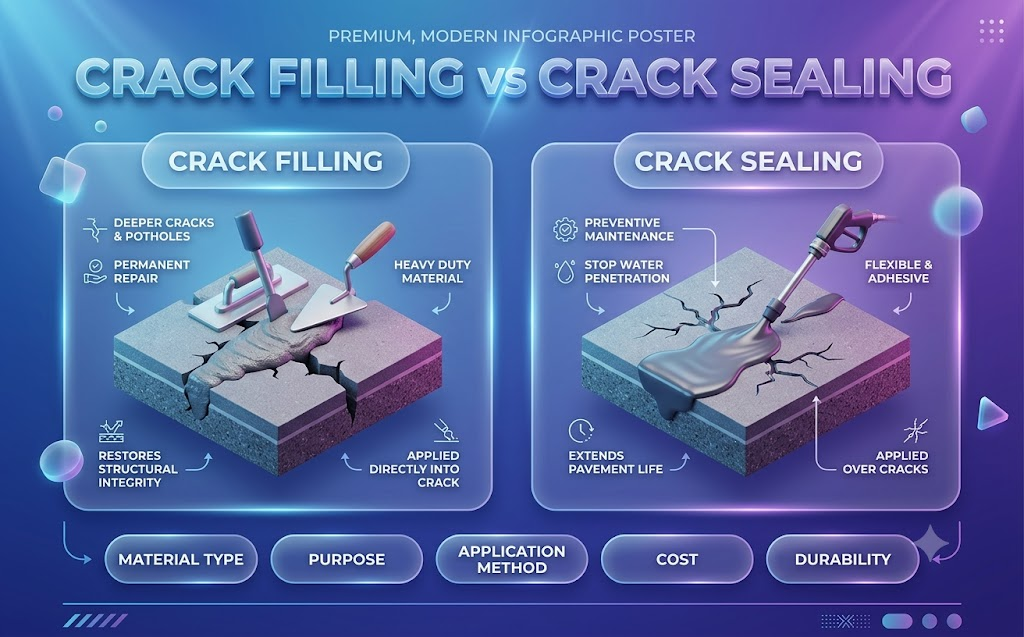
If you have ever looked at the cracks in your parking lot or driveway and wondered whether to fill them or seal them, you are not alone. The two sound almost identical, yet they use different materials, serve different cracks, and last for very different lengths of time. Knowing which one you need is where good asphalt crack fill services start. Here is the simple version: filling is a budget-friendly, temporary fix for stable cracks, while sealing is a flexible, long-lasting solution for cracks that move. Below, we break down every difference so you can choose with real confidence.
Crack Filling vs. Crack Sealing: The Key Differences
Every difference between the two methods traces back to one thing: whether the crack moves. Nonworking cracks stay put, while working cracks open and close with temperature and traffic. Keep that in mind as we walk through the eight differences that matter most. Here is the quick version at a glance, with a full breakdown of each point underneath:
| Factor | Crack filling | Crack sealing |
| Best for | Stable, nonworking cracks | Active, working cracks |
| Material | Liquid asphalt, emulsions, cutbacks | Rubberized asphalt and silicone |
| Flexibility | Hardens and turns brittle | Stays flexible and moves with the crack |
| Lifespan | About 1 to 2 seasons | 8 or more years |
| Cost | Lower upfront, repeated often | Higher upfront, cheaper over time |
| Application | Simpler, can be cold-applied | Needs heating and precise placement |
| Equipment | Shovel, tamper, basic patching tools | Melter pots, torches, and applicators |
| Protection | Basic, short-term barrier | Superior, long-term moisture barrier |
Primary Purpose
Filling is a temporary repair, and sealing is a long-lasting one. Crack filling blocks water in stable cracks that stay put, while crack sealing protects cracks that move with the seasons. That one distinction shapes every other difference below.
Materials Used
The materials are where the two truly split. Filling relies on non-rubberized products like liquid asphalt, asphalt emulsions, and cutbacks. Sealing uses flexible, rubberized materials such as asphalt rubber, low-modulus rubberized asphalt, and self-leveling silicone.
The rubber is what lets a sealant bend instead of break, which is the whole reason it outlasts a basic filler. Filler simply has nothing to give when the crack moves.
Flexibility and Movement
Flexibility is the real dealbreaker. Filler hardens and turns brittle once it cures, so it cannot cope with movement. This means a flexible sealant, which stretches as pavement expands and contracts, keeps protecting a moving crack long after filler would split apart.
Crack Types: Each One Addresses
Each method is built for a specific kind of crack:
- Filling suits nonworking cracks: stable, hairline cracks under about a tenth of an inch
- Sealing suits working cracks: wider cracks that move with temperature and traffic
Use the wrong method for the crack type, and the repair fails no matter how neatly it is applied.
Expected Lifespan
This is where the gap really shows. Filling usually lasts only one to two seasons before it needs redoing. Sealing can protect the same crack for eight years or more.
Cost and Budget
Cost tells two very different stories. Filling is cheaper upfront but needs frequent reapplication, so the early savings fade fast. As a result, sealing often costs more at first, yet less for every year of protection it delivers.
Application and Equipment
The work and the tools differ as much as the materials do:
- Filling is simpler and can be cold-applied, using a shovel, tamper, and basic patching tools
- Sealing needs heating, melter pots, torches, careful crack cleaning, and precise placement
That extra effort is exactly why a proper seal protects for so much longer. The upfront work pays for itself in years of quiet performance.
Protection Level
In addition, the level of protection is night and day. Filling gives a basic, short-term barrier against water and debris. Sealing delivers superior, long-term moisture protection that helps prevent the bigger failures water causes.
Keeping water out is the whole game, since moisture is what turns a hairline crack into a pothole.
How to Choose Between Filling and Sealing
The right choice comes down to the cracks, the climate, and the budget. Professional asphalt crack fill services can confirm the call in a single visit, but the guidelines below make the decision easy. When in doubt, lean toward the option that handles movement.
When to Choose Crack Filling
Pick filling for stable cracks and tight budgets. It makes the most sense when:
- The cracks are narrow, hairline, and not spreading
- Your climate stays mild without big temperature swings
- The lot is near resurfacing and only needs short-term cover
- The cracks are cosmetic and are not yet letting water through
In short, filling is the practical pick when the pavement is stable or on its way out.
When to Choose Crack Sealing
Pick sealing for movement and longevity. It is the better call when:
- The cracks open and close with heat, cold, or traffic
- Your winters bring repeated freeze and thaw cycles
- The pavement is fairly new and worth a long-term investment
- The lot sees heavy daily traffic you cannot easily shut down
If the cracks move at all, sealing is almost always the wiser long-term choice.
Common Mistakes to Avoid
Even simple repairs go wrong when these errors creep in, and each one is easy to sidestep once you know it.
Using Filler on Working Cracks
This is the most common and costly mistake. Filler cannot flex, so on a moving crack, it splits apart within a season, and the water comes straight back in. You end up paying twice, first for the filler and then for the real repair.
Skipping Crack Cleaning Before Sealing
Sealant only bonds to a clean crack. Dirt, weeds, and moisture left behind weaken the seal and cut its life short, so proper cleaning is never a step to rush. Spending a few extra minutes on prep protects years of performance.
Choosing on Price Alone
The cheapest option rarely stays cheapest. Repairs that fail in one season can cost more over time than a durable seal, so weigh long-term value rather than the opening price. The smartest budget plans for the lowest cost per year rather than the lowest cost today.
Bottom Line
The difference between crack filling and crack sealing comes down to movement, materials, and time. Filling is a quick, low-cost patch for stable cracks, while sealing is a flexible, lasting shield for cracks that move. When you match the method to the crack, professional asphalt crack fill services protect your pavement and save you money for years.
When your asphalt starts to crack, Satterfield Paving offers both fixes under one roof. The crews handle crack filling and crack sealing, so they match the right method to your cracks rather than forcing a one-size-fits-all repair. They round it out with sealcoating, pothole repair, and preventive measures that keep water out and stop small cracks from spreading.